The cost of living in florida is one of the most cited reasons people move here, and also one of the most misrepresented. Most guides compare one housing number to one other housing number and call it done. This one doesn’t. If you’re seriously weighing a move to Florida, you need the full picture: housing, taxes, groceries, insurance, healthcare, and what the combined numbers actually change about your monthly financial position.

 Jacksonville is where the cost of living in florida argument stops being theoretical. It’s cheaper than most of Florida while still sitting on the Atlantic coast with a diversified economy and real estate that continues to attract buyers from higher-cost markets. The best places to live in florida comparison is worth reading for a fuller market picture, but Jacksonville consistently sits at the top of the affordability-to-quality ratio in every credible analysis of Florida cities.
Florida Cost of Living vs the National Average
The One Number That Explains Florida’s Appeal
Florida’s overall cost of living sits approximately 3% below the national average according to RentCafe’s 2026 data. That headline number is real but incomplete. The 3% average conceals wide variation by city. Jacksonville runs 7% to 10% below the national average. Miami runs above it. Where you land in Florida matters as much as the fact that you moved to Florida.What “3% Below National Average” Actually Covers
Through Redfin’s city-level analysis, the numbers are stronger: housing 20% to 26% below the national average, healthcare 17% below, utilities 9% below. Groceries are the one category where Florida runs about 5% above the national average. The cost of living in florida advantage is real. It’s just concentrated in specific categories, not spread evenly across the board.Cost of Living in Jacksonville FL vs Other Florida Cities
Jacksonville vs Tampa
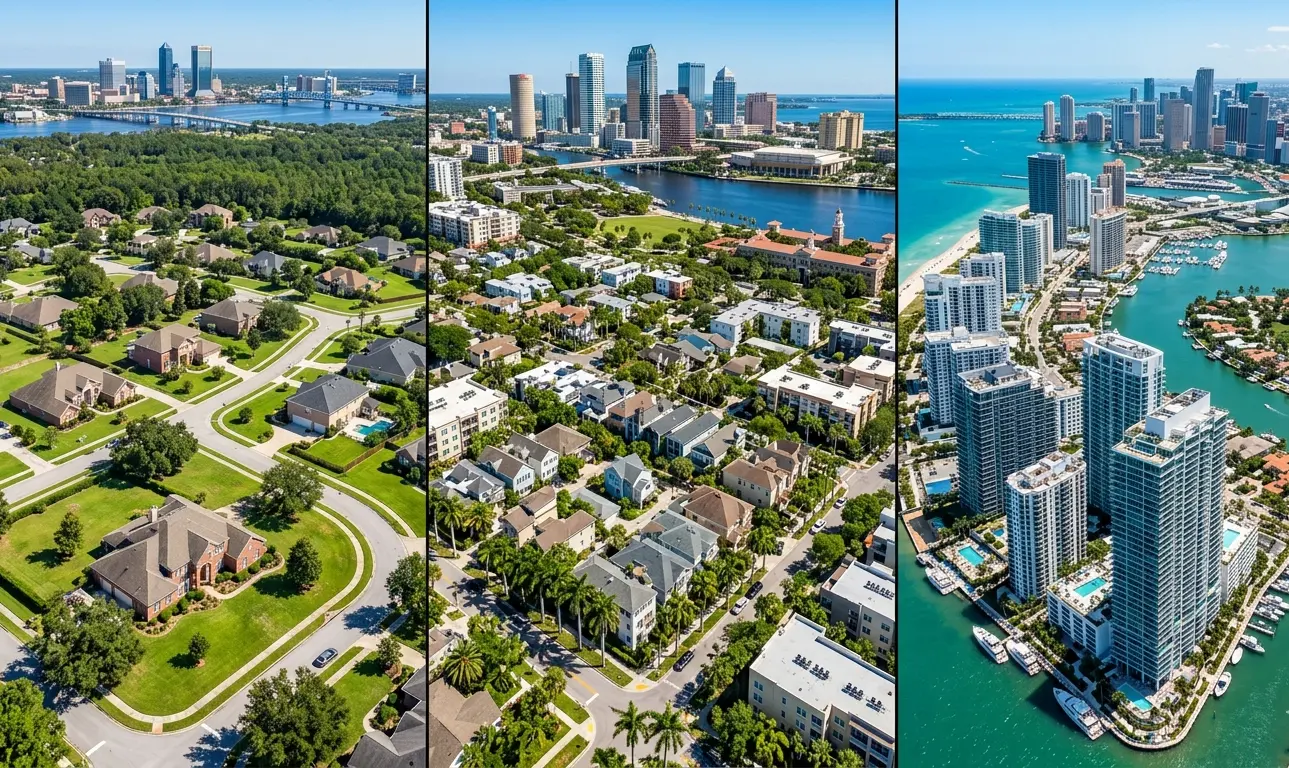
The cost of living in florida varies more between cities than most guides admit. According to RealtyTimes’ 2026 analysis, the cost of living in florida is most favorable in Jacksonville compared to Tampa, where prices in neighborhoods like South Tampa run $50,000 to $100,000 above Jacksonville equivalents. Remote workers and healthcare professionals with flexibility are noticing Jacksonville’s job market offers similar opportunity at a lower baseline.Jacksonville vs Miami
Jacksonville vs Miami is not close. Miami’s median runs above $600,000 versus Jacksonville’s $309,000, and South Florida insurance adds $5,000 to $15,000 or more per year on top.The Real Financial Advantage: Stacking All the Savings
Zero State Income Tax on Day One
The florida cost of living comparison changes completely when you factor in state income tax, which almost every housing-focused guide leaves out entirely. Florida has no state income tax. A household earning $120,000 per year moving from New York saves approximately $7,000 to $9,000 annually in state income tax from the first year. From California, the savings at that income level run $5,000 to $7,000. This money shows up in your bank account starting the first paycheck after Florida residency is established. Read the full breakdown of Florida state income tax to understand how much your specific income level saves.Homestead Exemption on Your Property Tax
Once you’re a homeowner in Florida, the Florida homestead exemption reduces your taxable property value by up to $50,722, saving most Jacksonville buyers $750 to $2,000 per year. The Save Our Homes cap then limits how fast your assessed value can grow, compounding the savings over time. The full mechanics are worth understanding before you close on a home. The Florida homestead exemption guide covers them in detail.The Total Annual Savings Calculation: A Worked Example
No standard florida cost of living comparison includes this. A $120,000 household moving from New York to Jacksonville saves $7,000 to $9,000 per year in state income tax, $750 to $1,100 per year through the homestead exemption, and $500 to $1,500 per month on housing costs versus New York equivalents. The total annual improvement regularly exceeds $20,000 per year. No competing guide on the cost of living in florida builds this calculation specifically for Jacksonville using all three variables together.Housing and the Cost of Living in Florida by City
Jacksonville: 20% Below the National Average
Jacksonville housing at 20% to 26% below the national average is the single strongest component of the city’s affordability case. ExtraSpace’s data from the Council for Community and Economic Research puts it at 26% below. Redfin’s city-level data shows 20% below. Either figure puts Jacksonville in the same affordability tier as Midwest cities while maintaining direct Atlantic coast access, a major diversified economy, and real estate that still hasn’t been fully repriced for the attention it’s getting. For buyers exploring Duval County real estate specifically, the county page covers current pricing, neighborhood breakdowns, and what the 2026 market actually looks like.What Florida Costs More Than You Expect
Groceries Run About 5% Above National Average
Grocery costs in Florida run approximately 5% above the national average, reflecting the state’s food import dependence. That’s $25 to $60 per month more than the national average for most households.Homeowners Insurance Has Changed the Equation
Here’s where the cost of living in florida picture gets more complicated. Homeowners insurance in Florida has risen sharply over the past three years. Coastal and flood-zone properties in Jacksonville can run $3,000 to $10,000 or more annually depending on location and coverage. This is the cost variable that most of the attractive Florida affordability marketing underplays. Anyone building a budget around moving to Florida needs an actual insurance quote before finalizing their numbers, not a state average. For context on what different Jacksonville neighborhoods carry in flood and wind exposure, see the Jacksonville real estate market analysis.No State Income Tax But Sales Tax Applies
Florida replaces income tax with a 6% sales tax plus county surtax (7% in Jacksonville). Florida is more efficient for high earners who save or invest a large share of income. Households that spend nearly everything they earn pay more in sales tax proportionally.Is Florida Worth the Move? The Honest Cost Answer
The Honest Answer by Income Level
For lower-income households, the florida cost of living advantage is modest because sales tax and insurance hit harder relative to income. But for most households, the cost of living in florida still compares favorably to equivalent coastal markets. For middle-income households, lower housing and no state income tax make Florida meaningfully more affordable than coastal alternatives. For high earners, Florida is one of the most financially efficient states in the country.Why Jacksonville Changes the Florida Calculus
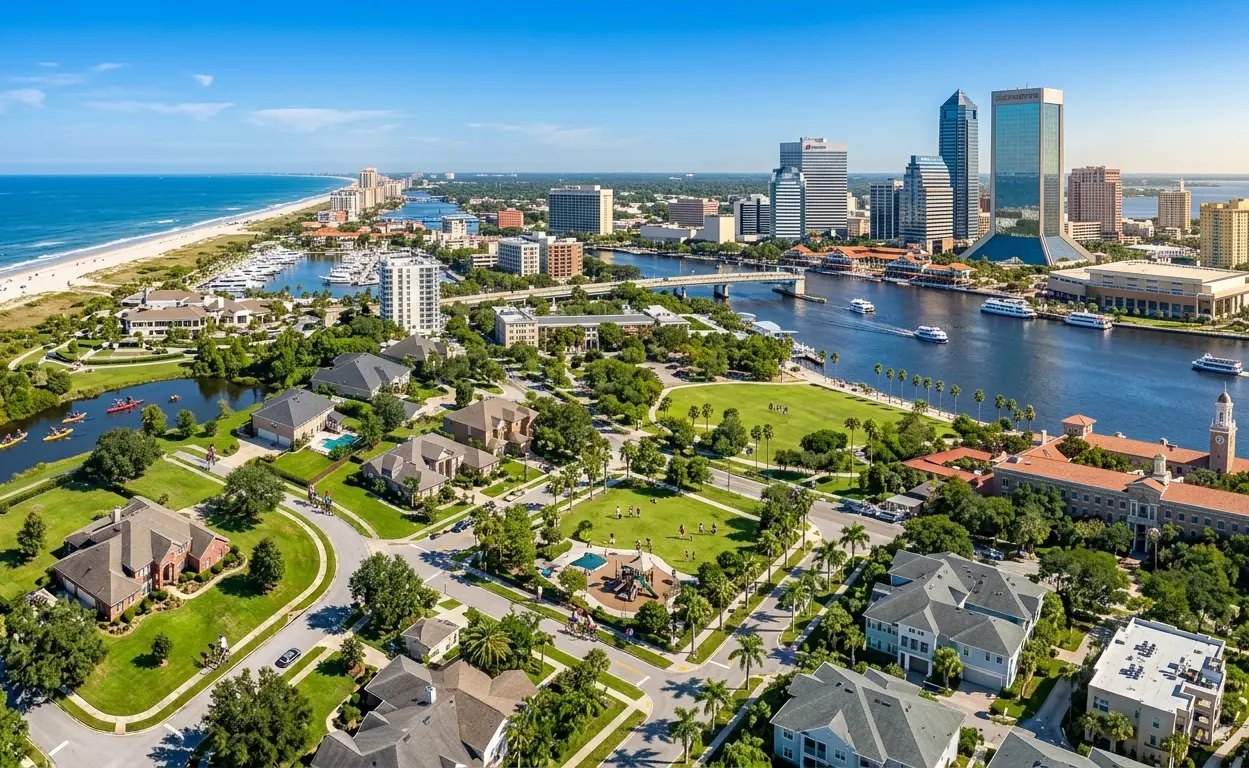 Jacksonville is where the cost of living in florida argument stops being theoretical. It’s cheaper than most of Florida while still sitting on the Atlantic coast with a diversified economy and real estate that continues to attract buyers from higher-cost markets. The best places to live in florida comparison is worth reading for a fuller market picture, but Jacksonville consistently sits at the top of the affordability-to-quality ratio in every credible analysis of Florida cities.