Buying a home inside a gated community sounds straightforward until you sit down with the real numbers. The gate itself is not the product. The lifestyle that comes with it is, and that lifestyle has a price that most buyers don’t see until they’re already in love with a specific property. This guide walks through the gated community pros and cons that actually move the decision, including the carrying cost math that no competing guide bothers to publish.

What “Gated Community” Actually Means
Electronic Gate vs Staffed Gate vs 24-Hour Manned
The gate type is the first meaningful distinction and it affects both your daily experience and the price you pay for that experience. Three categories cover most of what’s available in Northeast Florida.
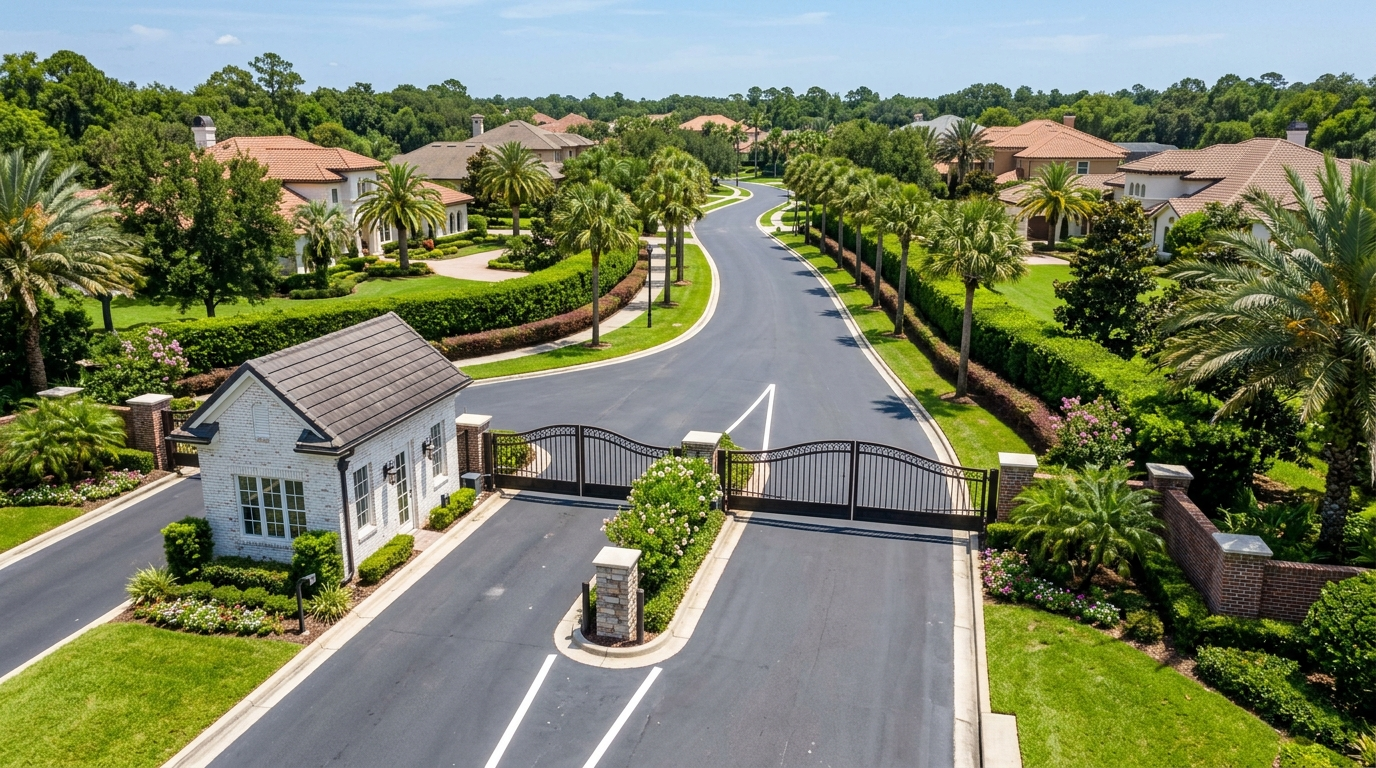
An electronic gate uses a keypad, phone app, or remote control to operate an arm or sliding barrier. It slows traffic and adds a sense of enclosure, but it does not screen visitors. Anyone who tailgates a resident through gets in without challenge. Most mid-range gated communities in the Jacksonville area use this format. The monthly HOA contribution at this level typically runs $150 to $300.
A staffed or part-time gate adds a guard presence during peak hours, usually mornings and evenings. The guard logs visitors and turns away anyone without a resident’s authorization. This adds real security beyond what the mechanical arm provides, and it adds roughly $100 to $200 per month to HOA costs compared to an electronic gate equivalent.
A 24-hour manned guardhouse is the top tier. Every vehicle that enters is logged. Deliveries require advance registration. Contractors need approval. Communities like Deerwood, Marsh Landing, and Queens Harbour in the Jacksonville metro operate at this level. The premium for 24-hour staffing typically shows up as a $400 to $800 per month HOA fee, sometimes more.
The Pros of Living in a Gated Community
Privacy and Security: What the Data Actually Shows
Security is the most cited reason buyers choose gated communities, and the data offers mixed support for exactly how much safer they are. A Journal of Research in Crime and Delinquency study found that gated communities report fewer property crimes than comparable non-gated neighborhoods. The restricted access does reduce opportunistic vehicle and property theft. The meaningful difference is at the high end: 24-hour manned communities with logging protocols show the most significant crime reduction compared to electronic-only gate communities, which provide modest improvement at best.
What the data consistently supports is the perception of security. For buyers with families, the reduction in through-traffic alone, no cut-through drivers, no solicitors, fewer unfamiliar vehicles on residential streets, creates a livability improvement that’s real regardless of crime statistics.
Amenity Infrastructure You Won’t Find Outside the Gate
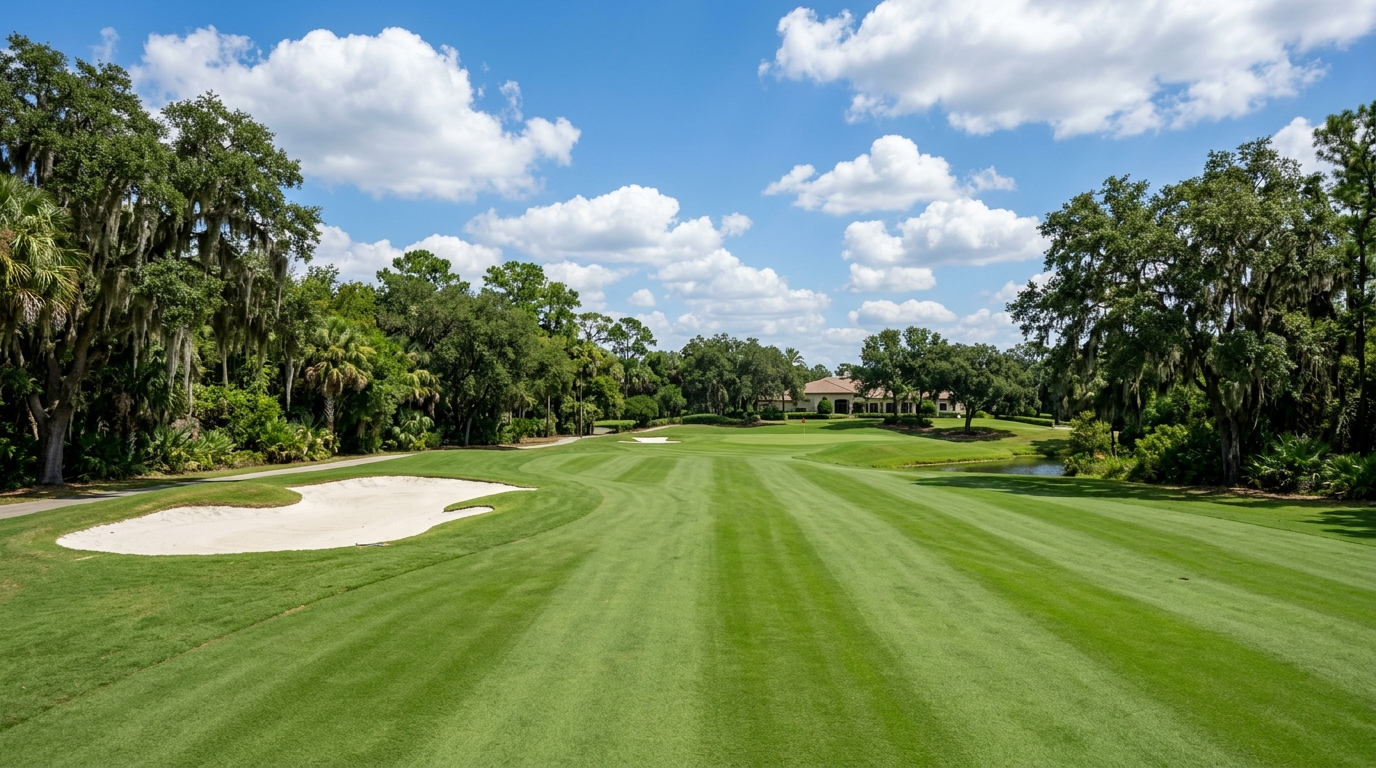
The communities with the strongest carrying costs also tend to deliver the most complete amenity packages. Private golf courses, resort-style pools, tennis and pickleball complexes, fitness centers, clubhouses with dining, walking trail systems, boat launches, and organized social calendars are all infrastructure that an HOA funds. Replicating that access independently would cost more than the HOA fees in most cases. Private club memberships alone run $500 to $1,500 per month at standalone facilities in Northeast Florida.
The question isn’t whether the amenities have value. It’s whether they match the way you actually live. A buyer who plays golf twice a week gets full return on a golf community membership. A buyer who wanted the address but rarely uses the course is paying for something they don’t consume.
Resale Value and Consistent Demand
Well-managed gated communities with established HOAs and maintained common areas hold value more consistently across market cycles than comparable non-gated inventory. The HOA management ensures the neighborhood doesn’t deteriorate visually during downturns, which protects resale comparables. Communities with limited inventory, Pablo Creek Reserve and Glen Kernan are examples with small lot counts, often see faster absorption when correctly priced because demand from buyers who specifically want those addresses exceeds available supply.
The Cons of Living in a Gated Community
HOA, CDD, and Club Membership: The True Annual Cost
This is the section that changes decisions. Most guides list “HOA fees” as a gated community con without giving real numbers. Here’s what the full carrying cost actually looks like.
A home in Deerwood Golf and Country Club priced at $700,000 carries an HOA fee of approximately $500 to $700 per month, that’s $6,000 to $8,400 per year. Add a required golf membership, Deerwood’s initiation runs $10,000 to $20,000 paid once, plus monthly dues of $500 to $800, and the annual ongoing cost of the membership alone adds another $6,000 to $9,600. If the community also carries a Community Development District assessment, which many newer planned communities do, add $1,500 to $3,000 per year on top of that.
Total annual carrying cost beyond the mortgage and property taxes for a $700,000 home in a manned-gate golf community in Jacksonville: roughly $13,000 to $21,000 per year. According to the Florida Department of Revenue, property tax rates and CDD assessments are public record and can be verified for any specific address before purchase.
Compare that to a $700,000 home in a non-gated neighborhood with no HOA. The annual overhead difference is the full $13,000 to $21,000. That’s $1,100 to $1,750 per month of carrying cost that has nothing to do with the mortgage payment.
Rules, Restrictions, and Architectural Standards
HOA-governed communities enforce deed restrictions that affect how you use and modify your property. Exterior paint colors, fence heights, landscaping choices, holiday decoration timing, vehicle storage, short-term rental rules, and renovation approvals are all subject to HOA review in most gated communities. For buyers coming from markets with no HOA experience, the discovery that they need architectural committee approval to change their front door color is genuinely surprising.
This is not inherently negative. The same rules that constrain you protect your neighbor’s property value too, which is why resale holds up in well-managed communities. But buyers who value personal autonomy in property decisions should read the governing documents fully before going under contract.
The Commute and Access Trade-Off
Gated communities that provide the most authentic privacy tend to sit slightly outside urban centers. The gate controls access, which means every trip in or out passes through it. For guests, contractors, and delivery services, this adds friction. For residents, it becomes a background habit. For buyers accustomed to fully open neighborhoods, the adjustment period is real.
The Carrying Cost Comparison Nobody Publishes
Manned Golf Community vs Non-Gated Equivalent
At $700,000 purchase price, here is the real annual cost difference between two buyers.
Buyer A in a 24-hour manned golf community (Deerwood-equivalent): HOA fees $6,000 to $8,400, club membership dues $6,000 to $9,600, CDD assessment $1,500 to $3,000. Total annual overhead beyond mortgage and taxes: $13,500 to $21,000.
Buyer B in a non-gated $700,000 home with no HOA: annual overhead beyond mortgage and taxes: $0 to $2,400 if a voluntary neighborhood association exists.
Annual difference: $11,000 to $21,000. Over ten years, that’s $110,000 to $210,000 paid toward community costs rather than equity. Whether that’s money well spent depends entirely on whether you use what you’re paying for.
Are Gated Communities Worth It in Jacksonville FL?
The honest answer is that it depends on your actual lifestyle rather than the lifestyle you imagine having. Jacksonville’s gated communities range from electronic-only master-planned communities with HOA fees under $200 per month to 24-hour manned golf and country club estates with total annual overhead exceeding $20,000. Those are different products serving different buyers.
For buyers who genuinely use the golf course, want the full country club social infrastructure, and value the prestige of a specific address, the carrying cost is a real product they’re purchasing. For buyers primarily attracted to the word “gated” without examining what the gate actually provides, the cost is a surprise waiting after closing.
The best first step is understanding what the specific community actually delivers and what it costs in full. Our guide to gated communities in Jacksonville FL breaks down every major community in the market with gate type, price range, and HOA structure.
Working With Living Luxury Florida on Gated Community Purchases
We Build the Full Cost Picture Before You Go Under Contract
The community details that change the decision, HOA fee structure, required versus optional club membership, CDD assessment, architectural restrictions, are part of every buyer consultation we run before any offer is submitted. Our real estate services include a full carrying cost analysis for any gated community you’re considering, because we’ve seen too many buyers discover the real annual cost after they’re emotionally committed to a specific address.
We Have Worked Both Sides of This Market
We’ve helped buyers choose gated golf communities because the lifestyle genuinely fit them. We’ve also helped buyers realize that the address they wanted came with $18,000 in annual overhead they weren’t prepared for, and redirected them to communities that delivered the gate and the schools without the mandatory membership cost. Either outcome is a success. The work is making sure buyers have the real numbers before they decide.